VIEW THE ENTIRE COLLECTION
Search records by scientific name, taxon, origin, locality, or other descriptive information from the collection.
Search all items
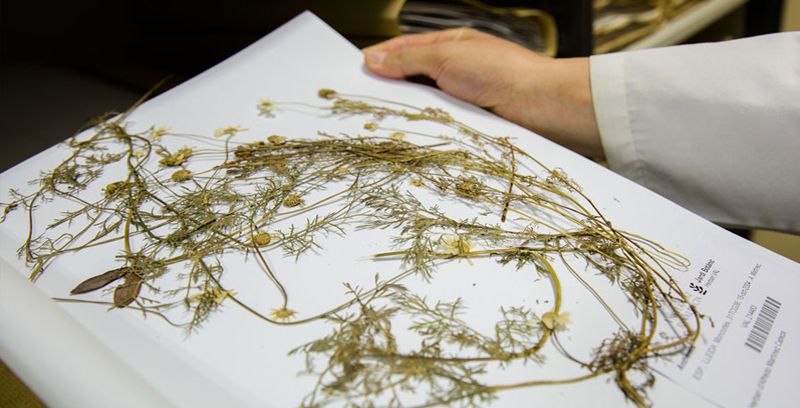
An herbarium is a collection of dried plants that have been properly prepared to ensure their indefinite preservation. A significant portion of botanical research—particularly in taxonomy—relies on herbariums, although they are also useful for floristic, biogeographic, and molecular studies. Furthermore, they serve as a record of plant references, their descriptions, and the materials used to document them. The material on which the name of a new plant is based is called a type specimen and is, in most cases, a dried plant deposited and preserved in a public herbarium.
The University of Valencia’s Herbarium of Vascular Plants (VAL) is the result of the merger of the former herbariums of the Faculties of Biology and Pharmacy and that of the Botanical Garden itself. It is housed in suitable facilities that ensure its preservation and facilitate access for researchers. The herbarium sheets are stored in compact cabinets with a capacity of approximately 350,000. Currently, it is one of the most important herbariums in Spain, with more than 250,000 sheets.
This new herbarium contains a good representation of the flora of the eastern half of the Iberian Peninsula, particularly the Valencian region and the Iberian System. It also houses the personal herbariums of the pharmacists Vicent Guillén, Aurelio Gámir, Josep Borja, and Manuel Calduch. The first two date from the late 19th century and, in addition to their own collections, include plants from Pau, Sennen, and Font Quer—botanists with whom Guillén and Gámir exchanged plants. Borja’s herbarium consists mainly of annotated specimens of the genus Sideritis, while Calduch focused his botanical work on the regions of Castellón, where his explorations of the Columbretes Islands are particularly noteworthy.
Explore the collection
VIEW THE ENTIRE COLLECTION
Search records by scientific name, taxon, origin, locality, or other descriptive information from the collection.
Search all itemsVIEW THE RECORDS WITH IMAGES
Browse records with associated images and filter them dynamically using a faceted search.
Records with imagesContact: herbari.val@uv.es
 UVcultura


